This is an ongoing project. I'm developing an actuator that measures its output torque in addition to position and velocity, which enables precise position and force control. The plan is to use it in a 3-DOF robot with parallel force and position control, and eventually to run time-delayed, passivity-based bilateral teleoperation – like in my Phantom robot project – on my own hardware.
Concept
Commercial torque sensors are expensive and bulky, so the torque is measured indirectly: a compliant element sits between the gearbox and the output, and two encoders measure the angle on both sides of it. The torque follows from the measured deflection and the stiffness of the element, which is identified on a test bench. The same encoders also provide the output position and velocity.
Knowing the joint torque allows closing an inner torque loop around the motor. On top of it, position, impedance or force controllers can be implemented, and the robot can react to contact with its environment instead of just following a trajectory.
Test setup and validation plan
The validation setup will apply known loads while logging both encoder channels and motor data. I will identify the compliant element's stiffness from measured deflection, then compare torque estimates against the applied load before closing the torque loop. This separates mechanical calibration, sensor repeatability and controller performance instead of treating the actuator as a black box.
Current state
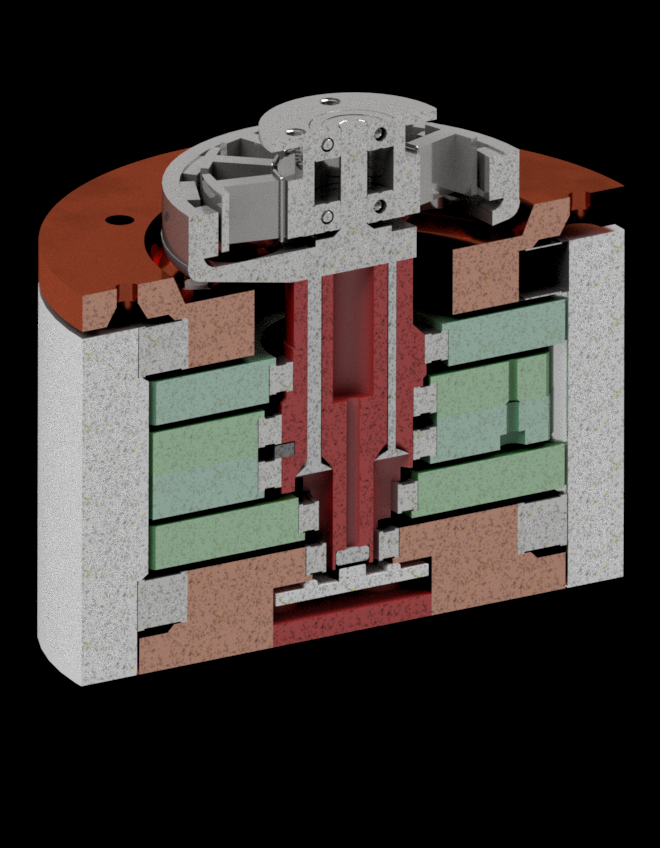
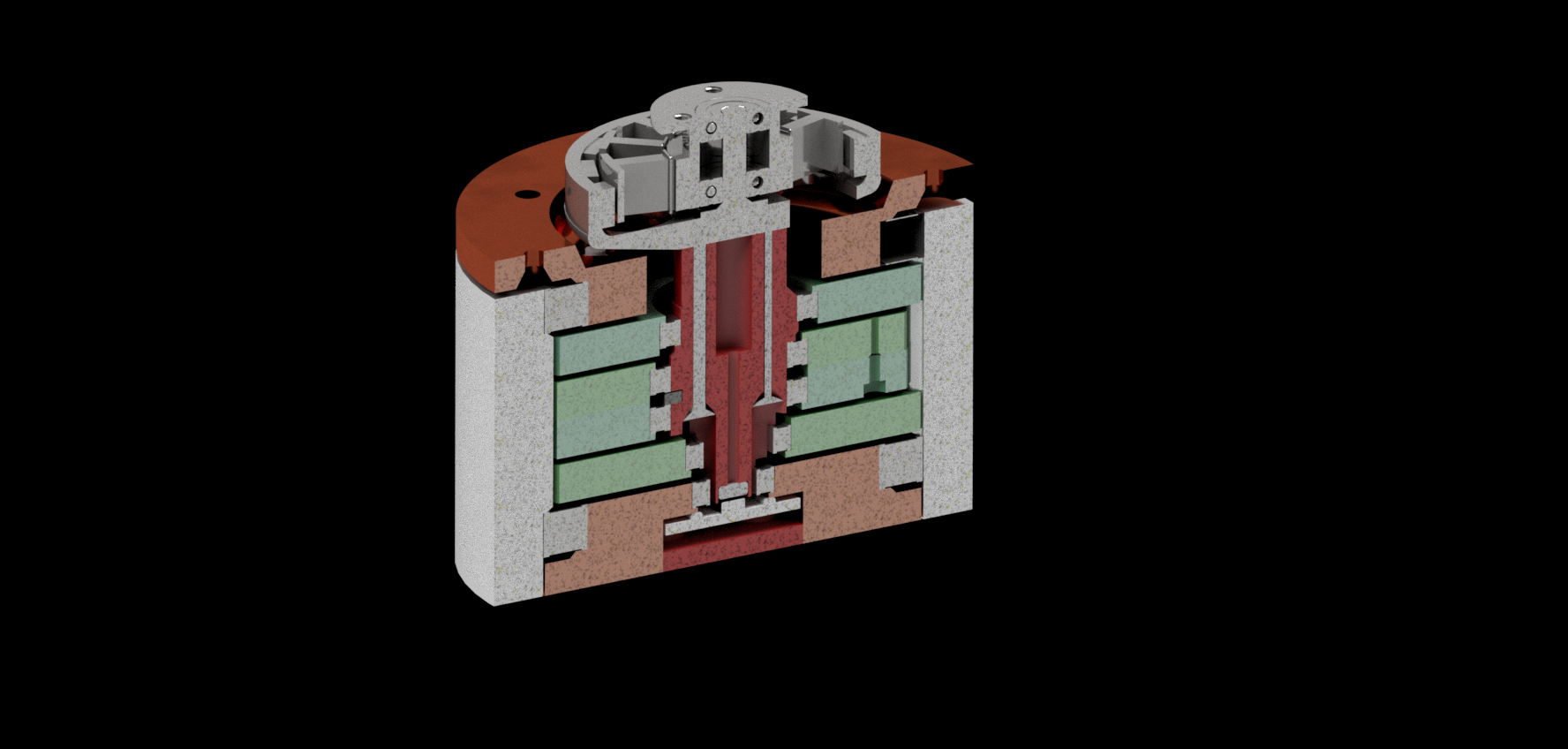
The mechanical design is done and first parts are 3D printed. Next steps are the electronics, the stiffness identification and the inner torque loop. The rendering below shows a cross-section of the current version.